
















The Data Revolution: Understanding Zero-Party Data vs. First-Party Data
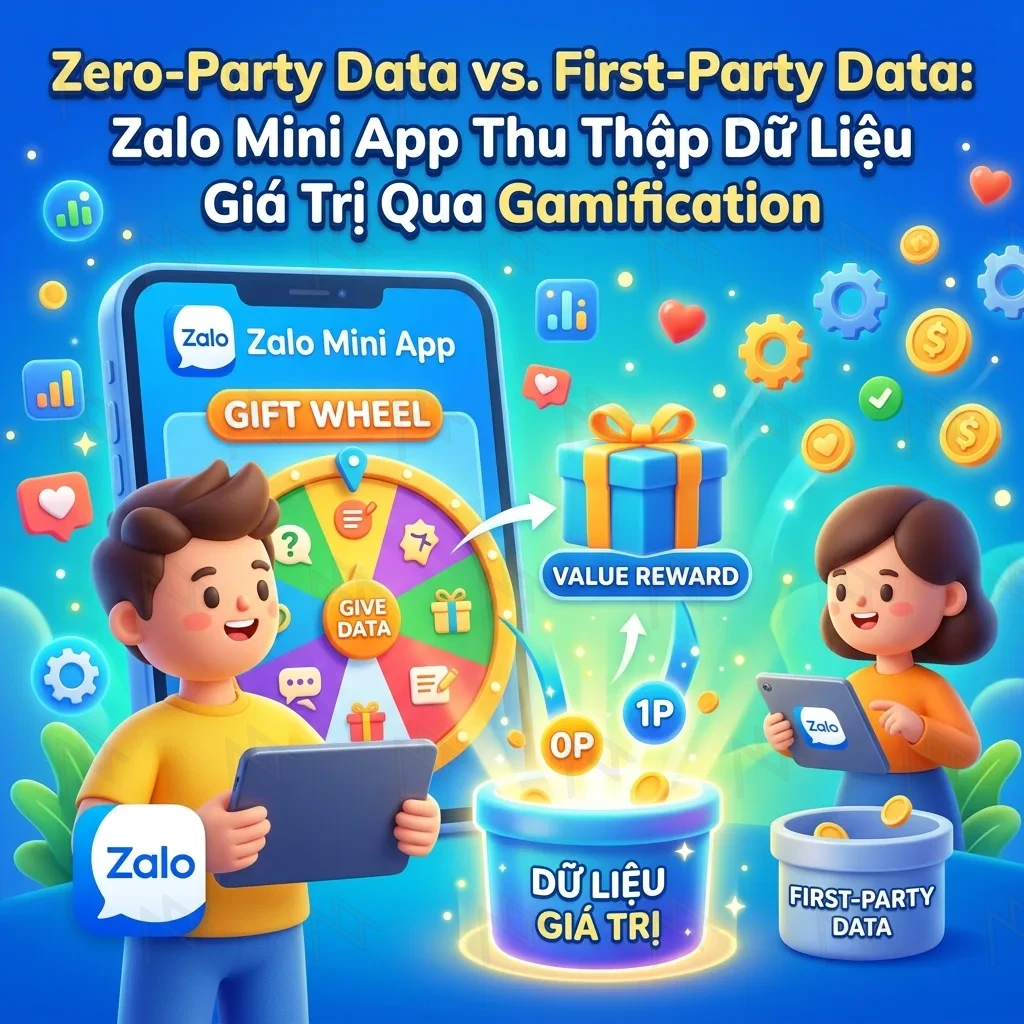
In today's digital landscape, with data privacy becoming a top priority and third-party cookies gradually being phased out, brands are shifting towards more transparent and user-centric data collection methods. Therefore, understanding the distinction between Zero-Party Data (ZPD) and First-Party Data (FPD) is crucial for building sustainable personalized marketing strategies.

Zalo Mini App, with its deep integration into the daily lives of Vietnamese people, offers a unique and powerful channel to collect both types of invaluable customer data, especially when combined with engaging gamification activities.
What is Zero-Party Data (ZPD)?
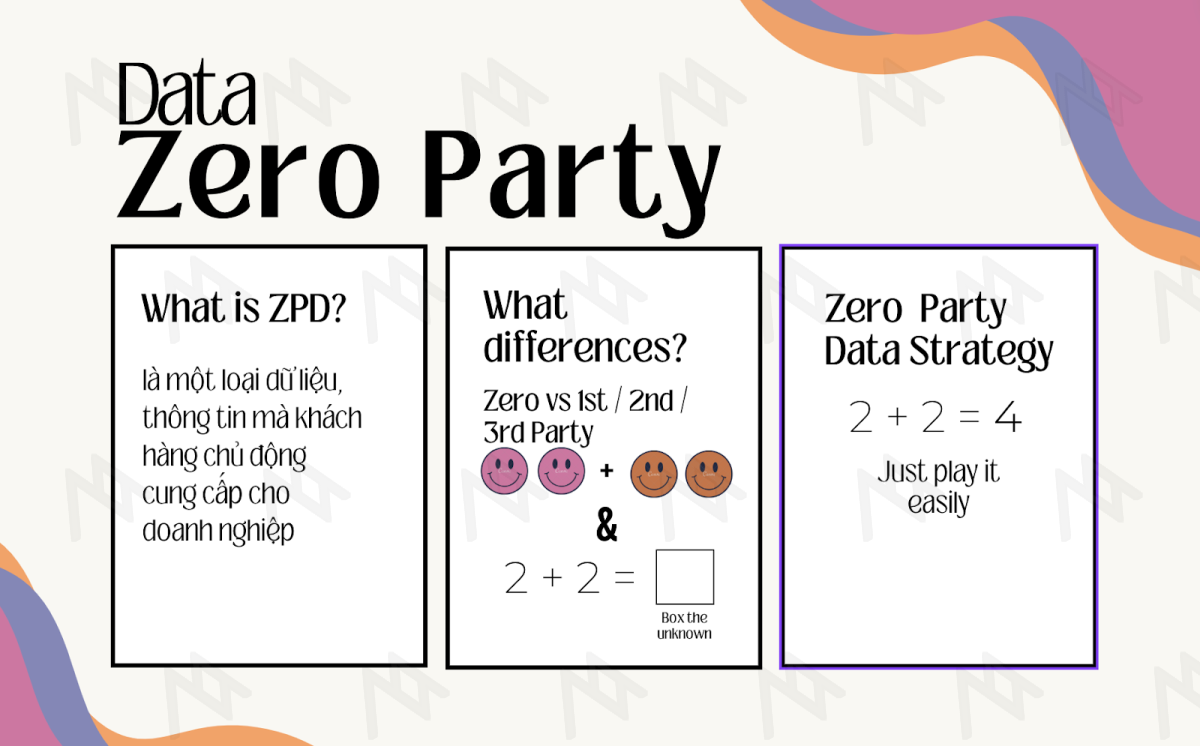
Zero-Party Data is information that customers actively and voluntarily share with a brand. This is not inferred or tracked data; rather, it's explicit data. It includes preferences, interests, purchase intentions, and personal context. Think of it as data directly from the source – your customers telling you what they want and like. The value of ZPD lies in its accuracy and the trust it builds, as customers willingly provide information, expecting a more personalized experience in return.
What is First-Party Data (FPD)?
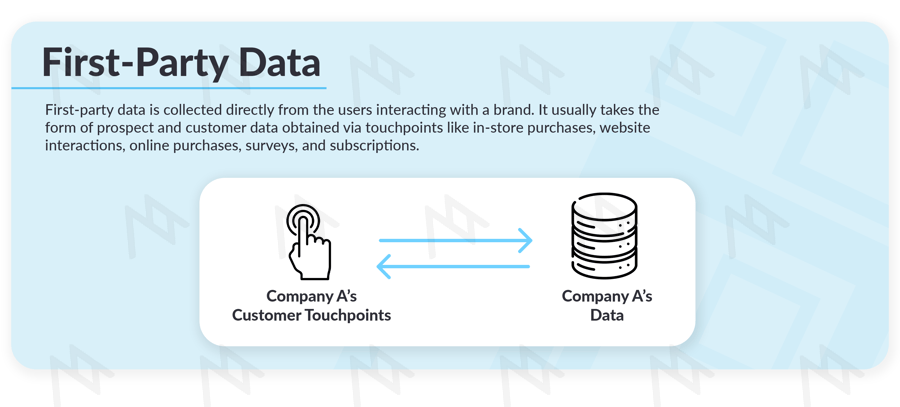
First-Party Data is information collected directly from a brand's own platforms and interactions with customers. This includes purchase history, website browsing behavior, mobile app interactions, demographic data from registrations, or engagement with an email campaign. FPD is owned by the brand, making it reliable, cost-effective, and directly relevant to the customer journey within your ecosystem.
Why is Zalo Mini App a Goldmine for Both Data Types?
Zalo boasts a massive user base in Vietnam, making its Mini App platform an indispensable tool for brands. Zalo Mini App provides a controlled, native environment for users to interact directly with brands without leaving the Zalo ecosystem.
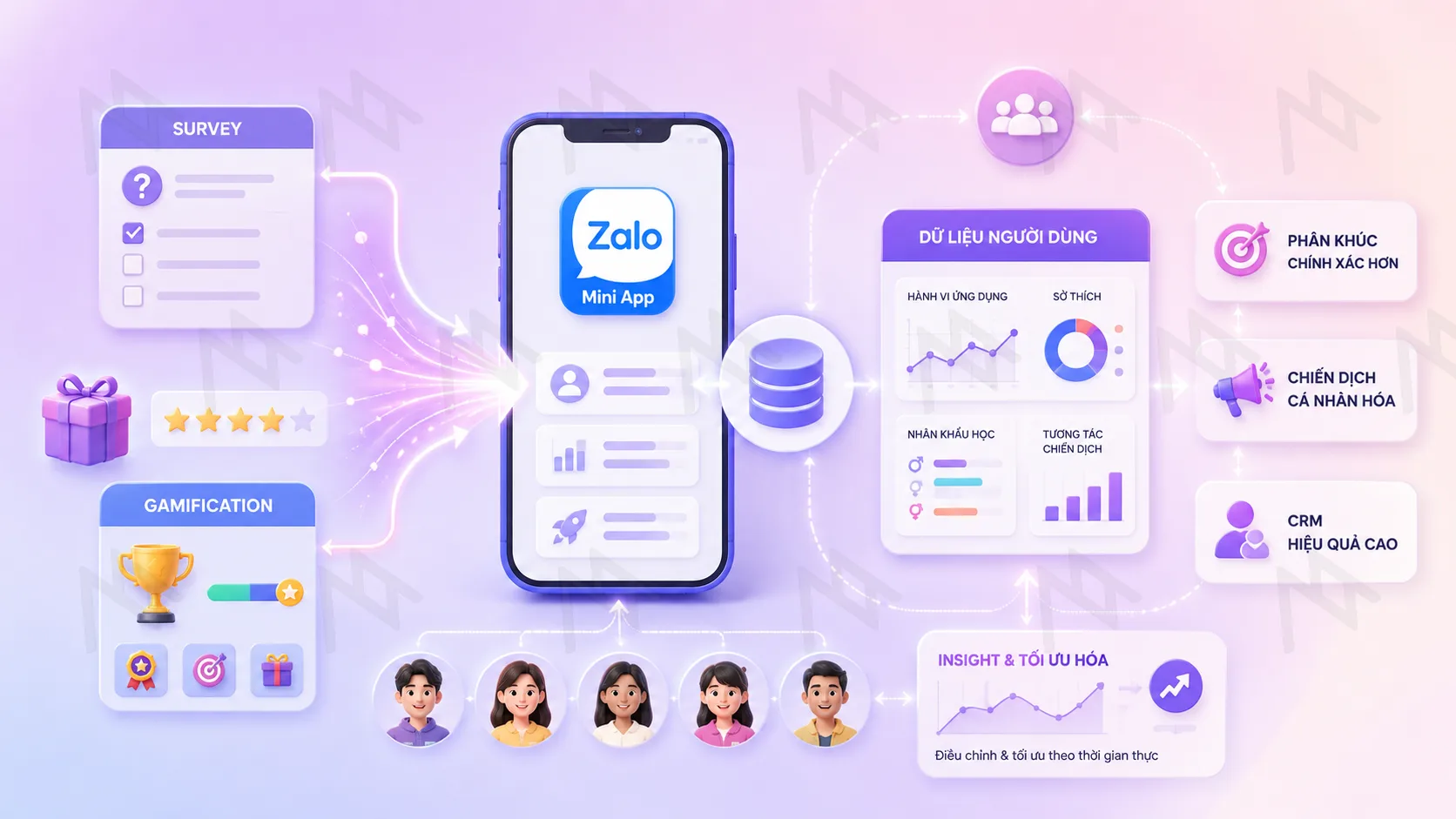
When strategically integrated with gamification, these Mini Apps become powerful instruments for collecting both ZPD and FPD. Gamification encourages users to share information and engage repeatedly, turning data collection into an enjoyable experience rather than an obligation.

Gamification: The Engaging Gateway to Valuable Data
Gamification is the application of game-design elements and game principles in non-game contexts. For Zalo Mini App, this means transforming everyday interactions into fun, rewarding experiences. This approach naturally facilitates data collection in several ways:
ZPD Collection: Gamified quizzes, preference selectors, personalized challenges, and interactive polls encourage users to actively provide information about their interests, desires, and personal details in exchange for rewards or progress.
FPD Collection: Tracking game progress, repeated plays, time spent in the Mini App, specific in-game actions, and conversion rates to purchases (if applicable) provides rich behavioral FPD. Brands can observe which content resonates, which actions lead to conversions, and how users navigate the brand experience.

Marvy Co. Case Studies: Real-World Success in Data Collection on Zalo Mini App
Marvy Co. has leveraged the power of gamification on Zalo Mini App to help numerous brands collect critical zero-party and first-party data, fostering deeper engagement and delivering significant results.
Case Study 1: OREO Socola Pie – Selfie for Rewards, Turning UGC into Marketing Data
Context: OREO Socola Pie launched the "Leave No Crumbs Behind" campaign to boost consumer engagement through a personalized selfie experience, while also encouraging users to create and share UGC (User-Generated Content).
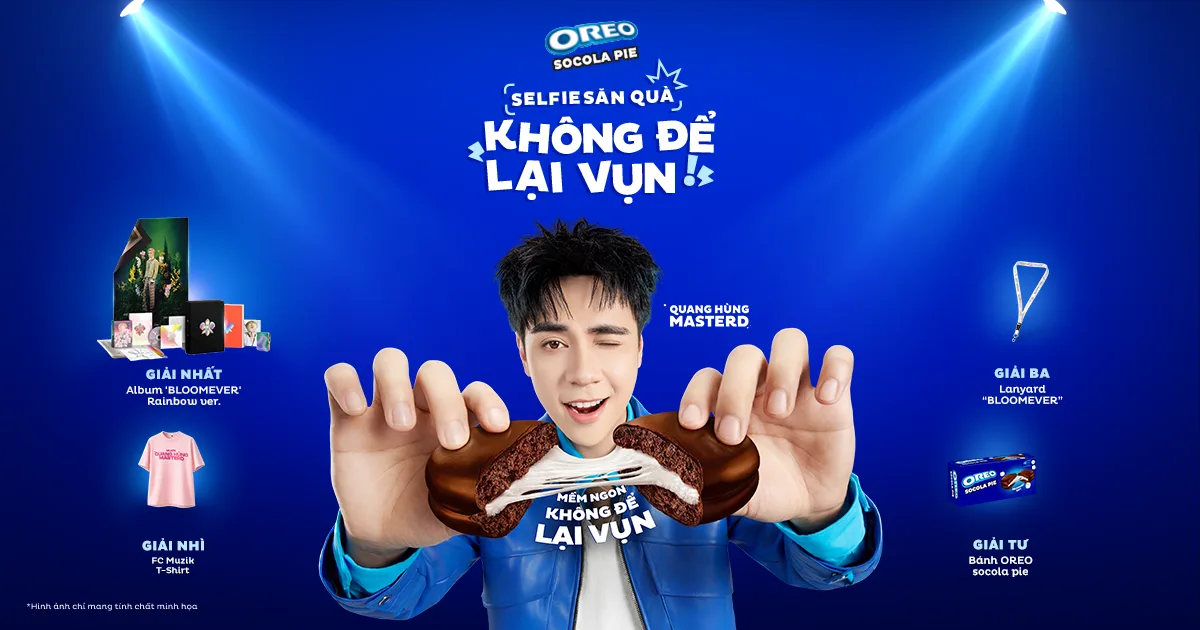
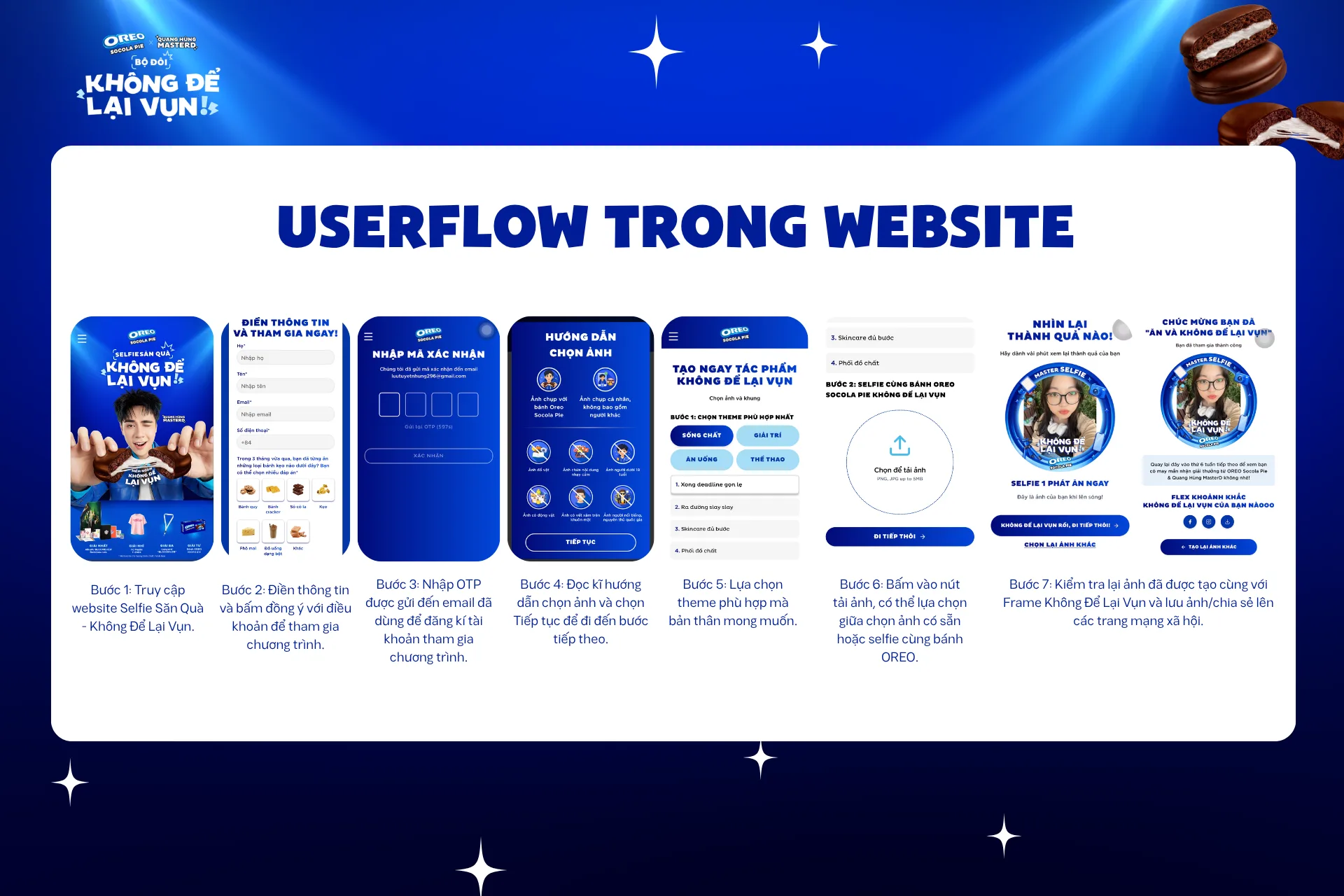
Marvy Co. developed an interactive platform with a mobile-first flow, allowing users to log in, verify OTP, take/upload photos, and create artwork with the OREO Socola Pie brand frame.
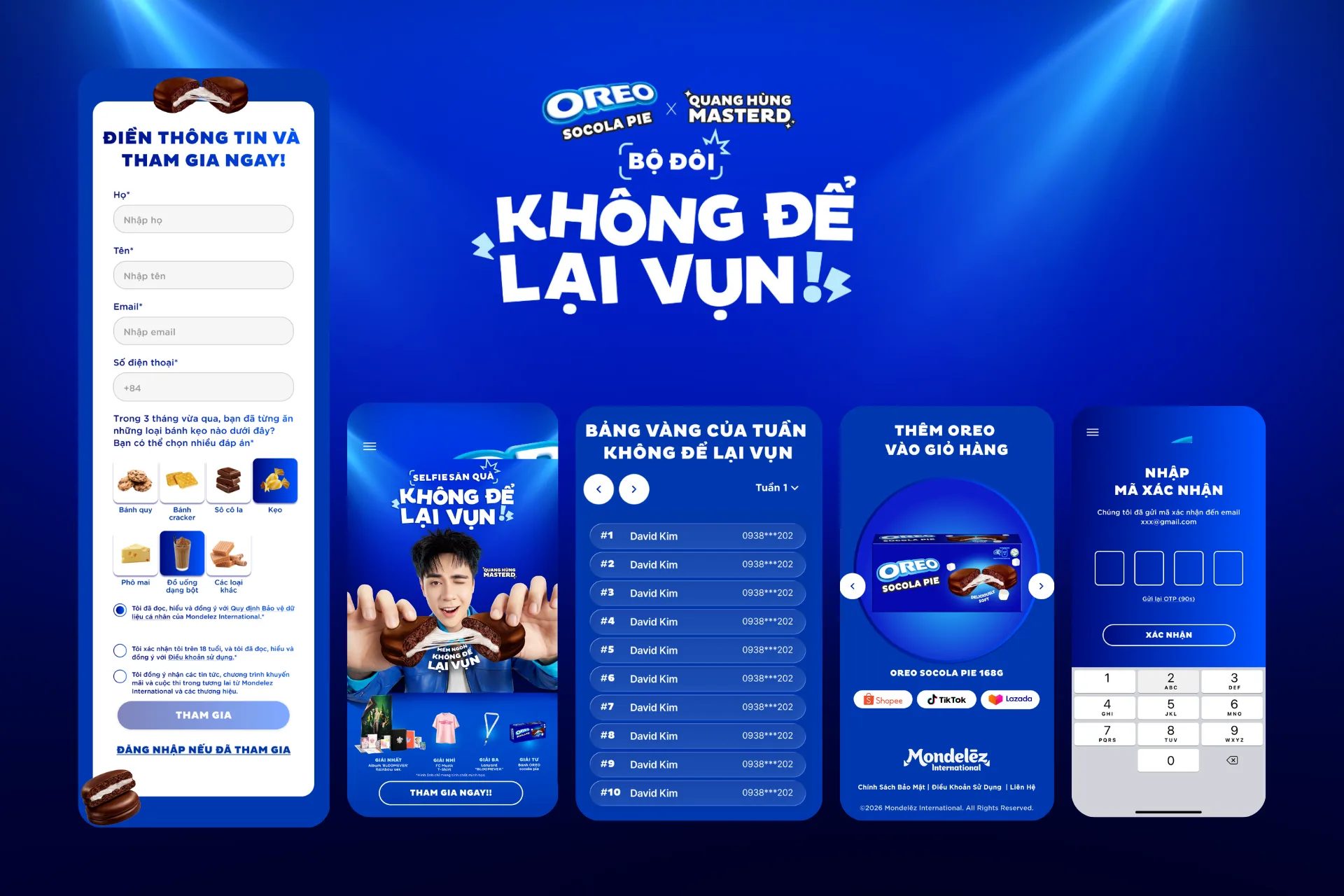
Gamification Mechanism: Users could take a selfie directly or upload an existing photo, then choose an OREO Socola Pie frame to create a personalized image.
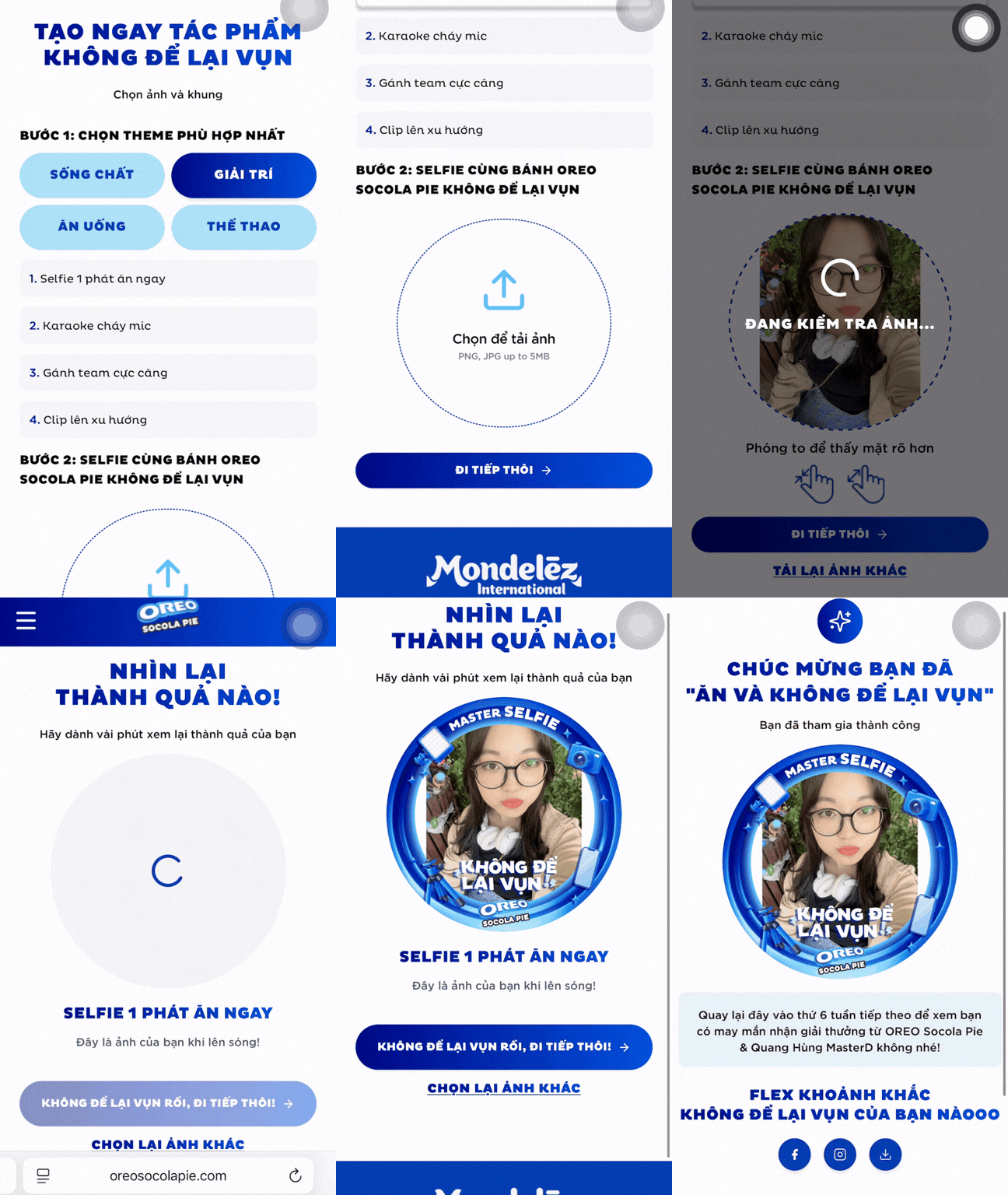
Each successfully created artwork became a valid entry, and users could continue to follow the weekly Leaderboard to increase their chances of winning prizes. The system also supported sharing artwork on Facebook/Instagram, turning players into an integral part of brand communication activities.
Data Collected:
First-Party Data (FPD): Through the login and OTP verification system, the brand could build a valid participant dataset. In addition to registration information, the campaign recorded direct behaviors on the platform such as participation count, successful photo creations, photo uploads, artwork downloads, Leaderboard activity, and social media shares. Marvy's CMS system allowed the marketing team to monitor and export this data for reporting, analysis, and remarketing.
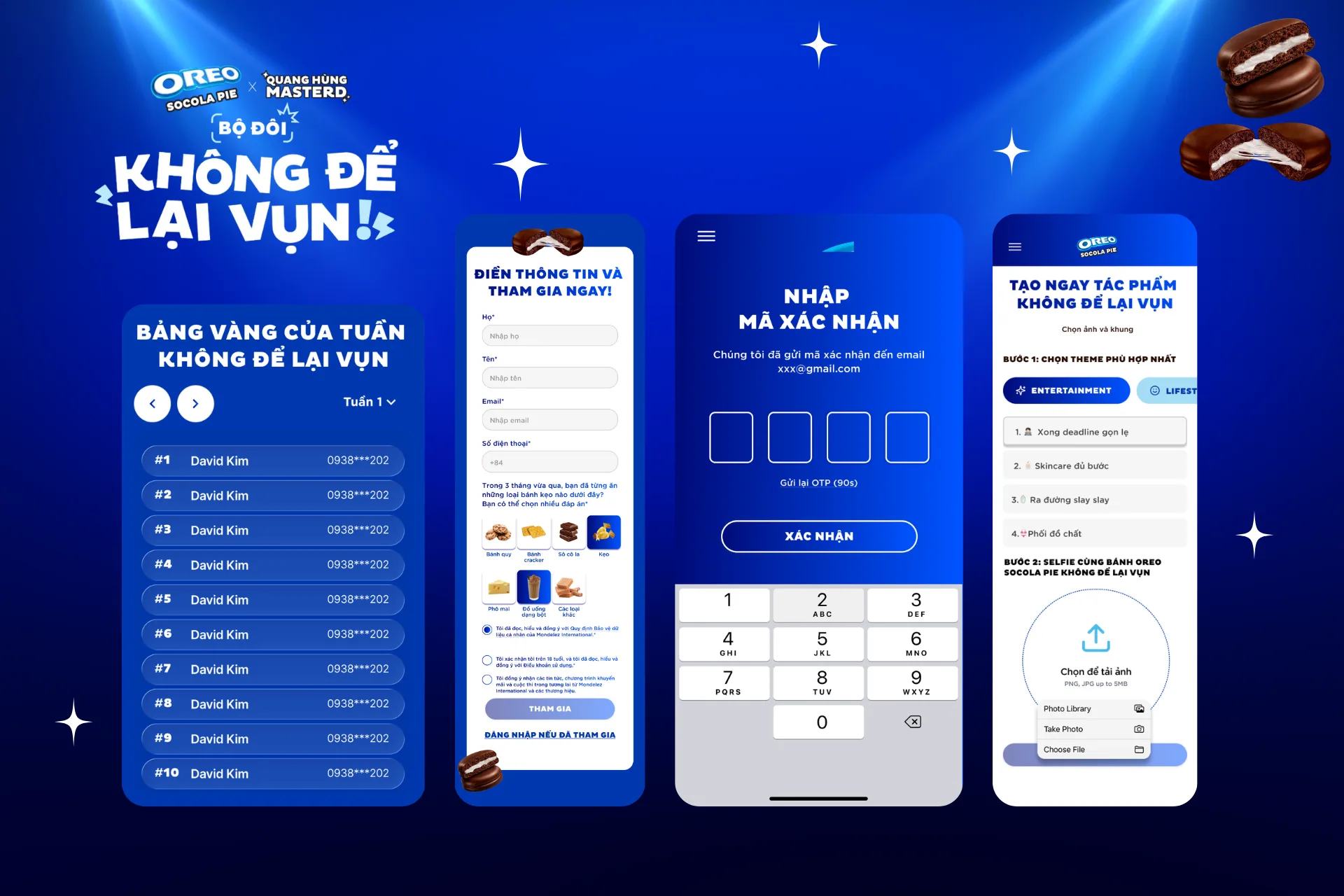
Zero-Party Data (ZPD): When extended on Zalo Mini App, the photo creation mechanism could be combined with actively provided user choices, such as preferences, style, favorite content type, or desired image concept. These choices helped the brand directly understand what users wanted to experience, rather than just inferring from interaction behavior. This is a valuable source of Zero-Party Data for building audience segments and personalizing subsequent marketing activities.
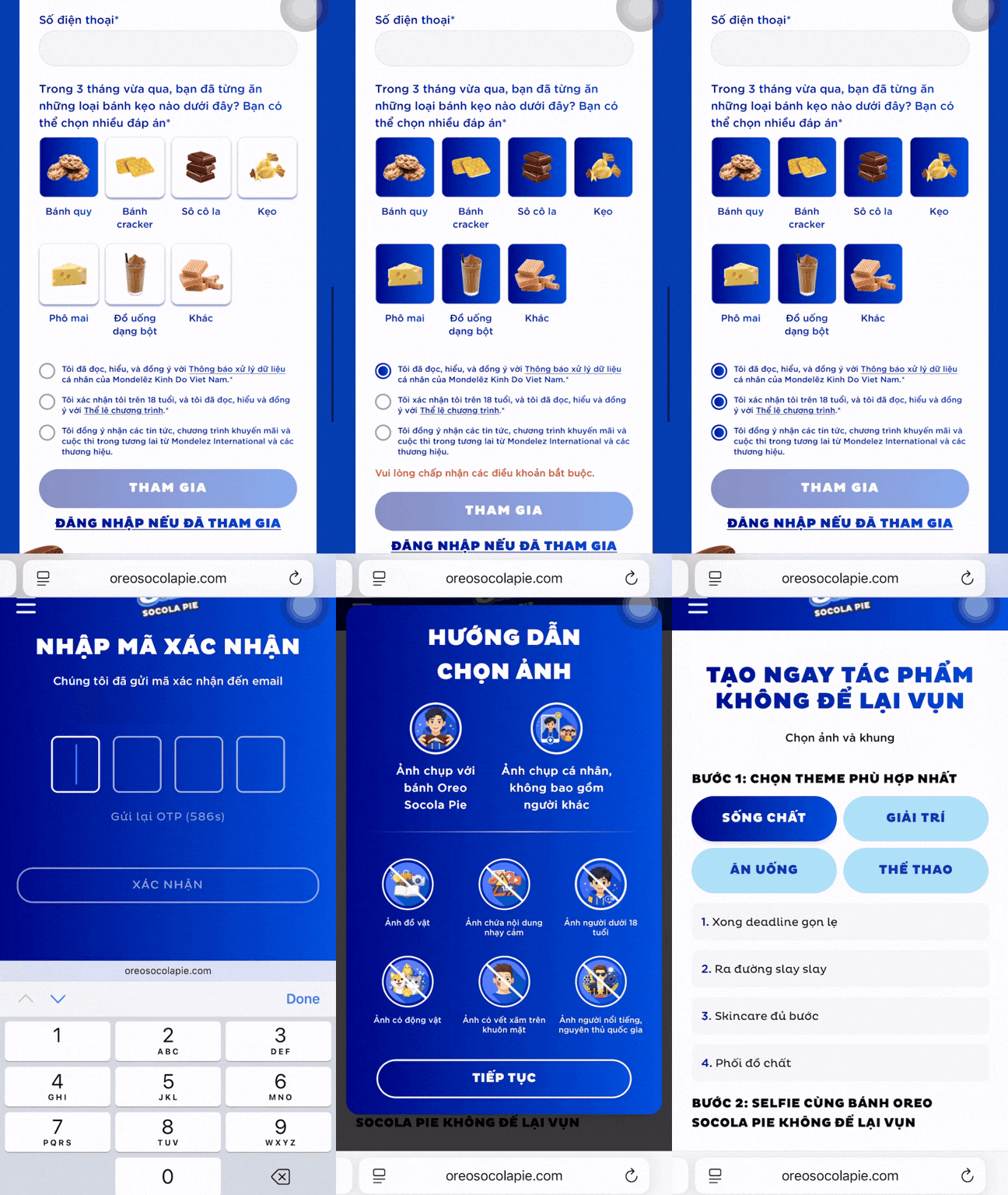
Impact: The OREO case demonstrates how a Selfie + UGC + Gamification experience can become an effective data touchpoint for a brand. In the actual implementation, the campaign recorded 4,342 participations, 2,512 successfully created artworks, 337 photo uploads, and 152 social media shares.

Notably, when this model is implemented on Zalo Mini App, brands can combine FPD and ZPD within the same journey: from registration data and interaction behavior to information users actively share about their personal preferences and choices. Thus, each selfie not only creates a UGC asset bearing the OREO identity but also becomes a touchpoint that helps the brand understand users better, segment audiences, and build more personalized CRM/remarketing activities.
Explore the OREO "Leave No Crumbs Behind" project with Marvy in more detail here
Case Study 2: Ngo Gia Black Tea – Lucky Pieces
Context: Ngo Gia Black Tea aimed to boost repeat purchases and enhance customer loyalty for its tea brand.
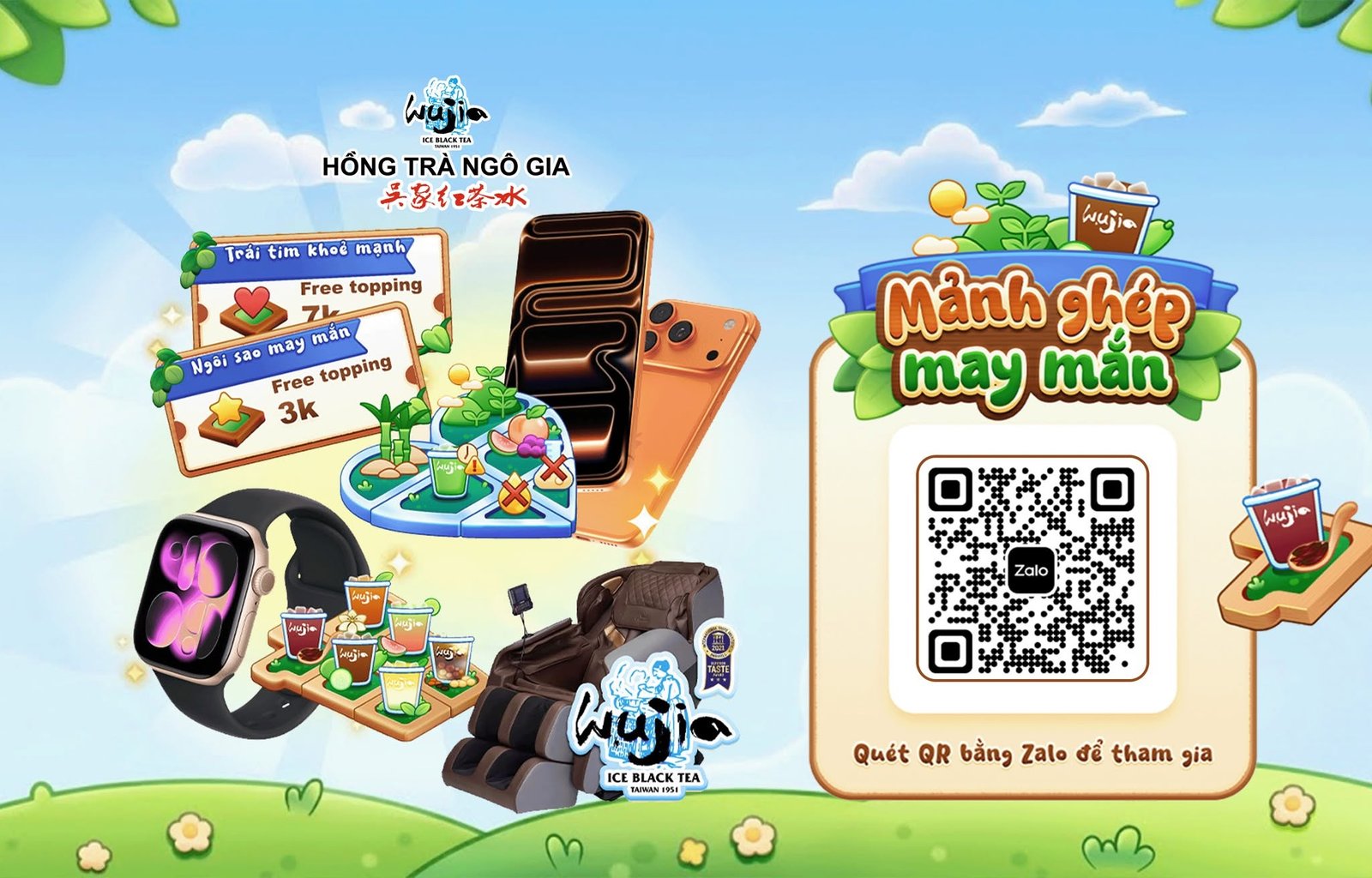
Gamification Mechanism: Marvy Co. developed the "Lucky Pieces" game on Ngo Gia Black Tea's Zalo Mini App. After each purchase, users received a chance to open a blind bag to collect random puzzle pieces or vouchers.
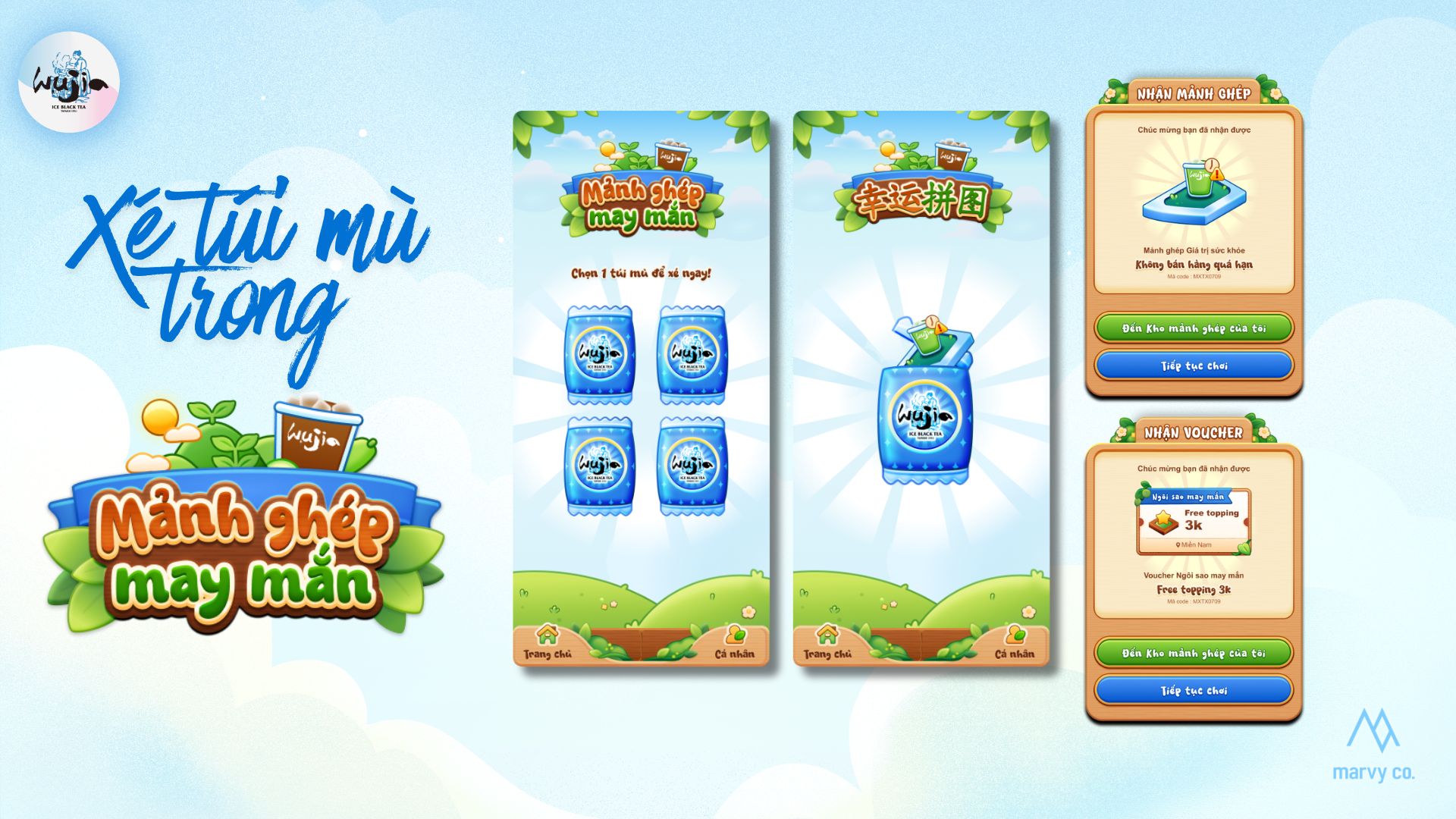
These pieces were part of brand-themed collections and could be shared or exchanged with friends, encouraging community interaction and faster collection completion. A real-time CMS system managed all player data, vouchers, and win rates.
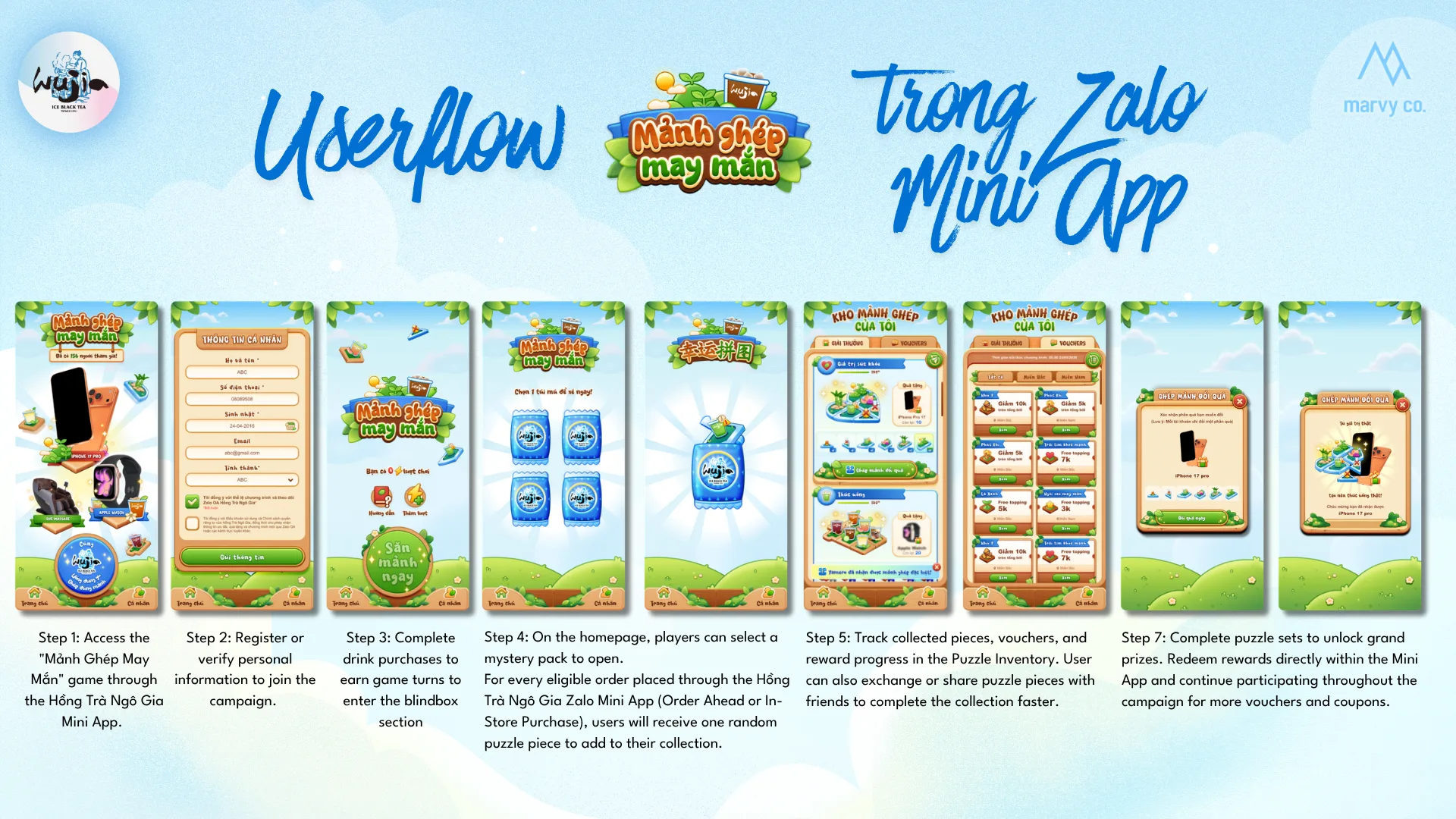
Data Collected:
Zero-Party Data: Indirectly, through users actively exchanging and searching for specific pieces, the brand gained insights into preferred themes and desired rewards. User feedback via Mini App interactions also provided explicit ZPD.
First-Party Data: Crucial FPD was collected, including purchase frequency tied to game participation, repeat Mini App visits, social sharing patterns (identifying influential users), and overall game engagement metrics.
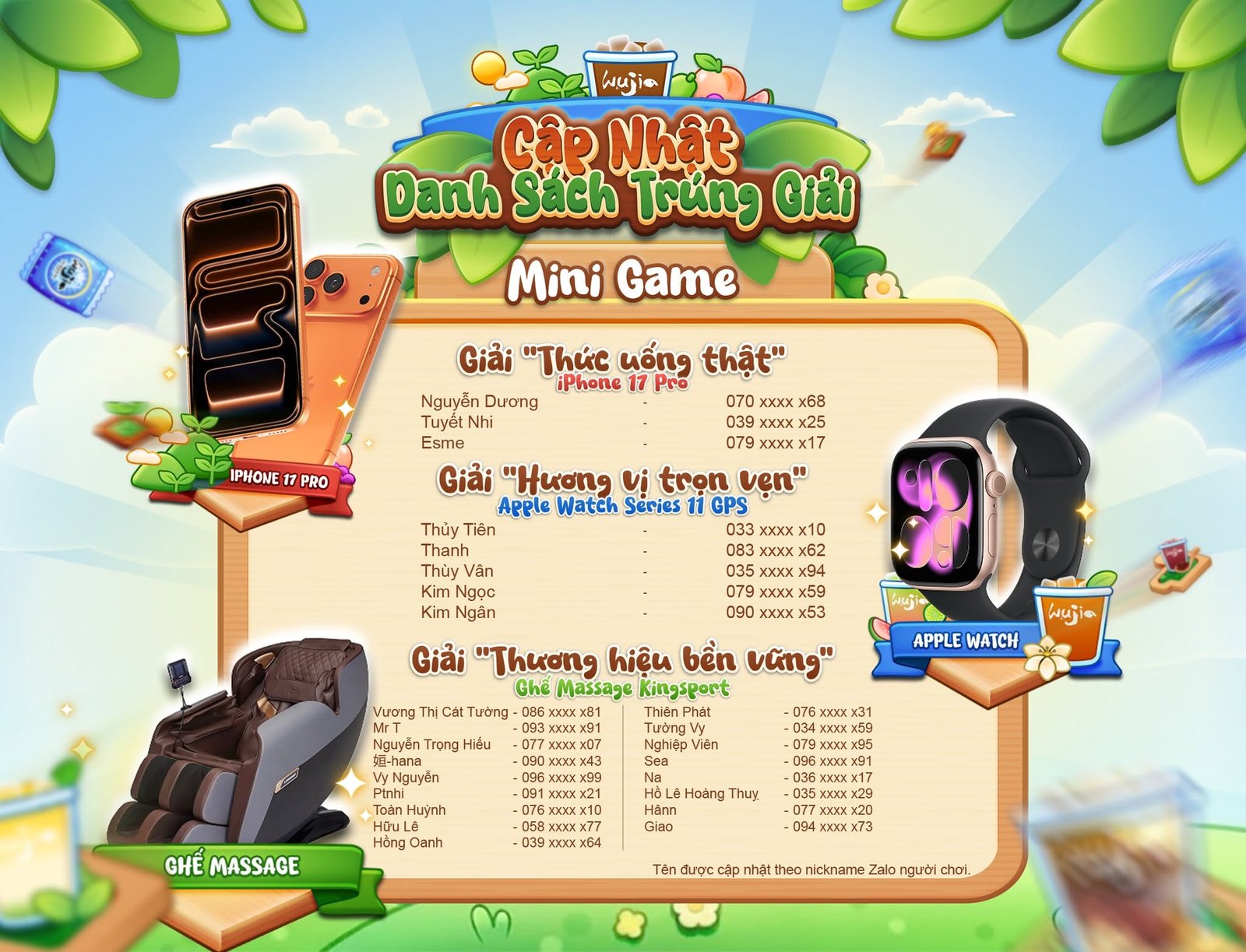
Impact: This campaign significantly boosted customer loyalty, repeat purchases, and generated organic word-of-mouth, providing Ngo Gia Black Tea with rich behavioral data to refine future marketing efforts.
View the full case study for Ngo Gia Black Tea Lucky Pieces Zalo Mini App here.
Case Study 3: MILO A2 Cool Milk – Small Steps, Cool for the Whole Family
Context: MILO wanted to launch its new A2 Cool Milk product, increase brand awareness among parents, and gather valuable insights for future CRM and remarketing.
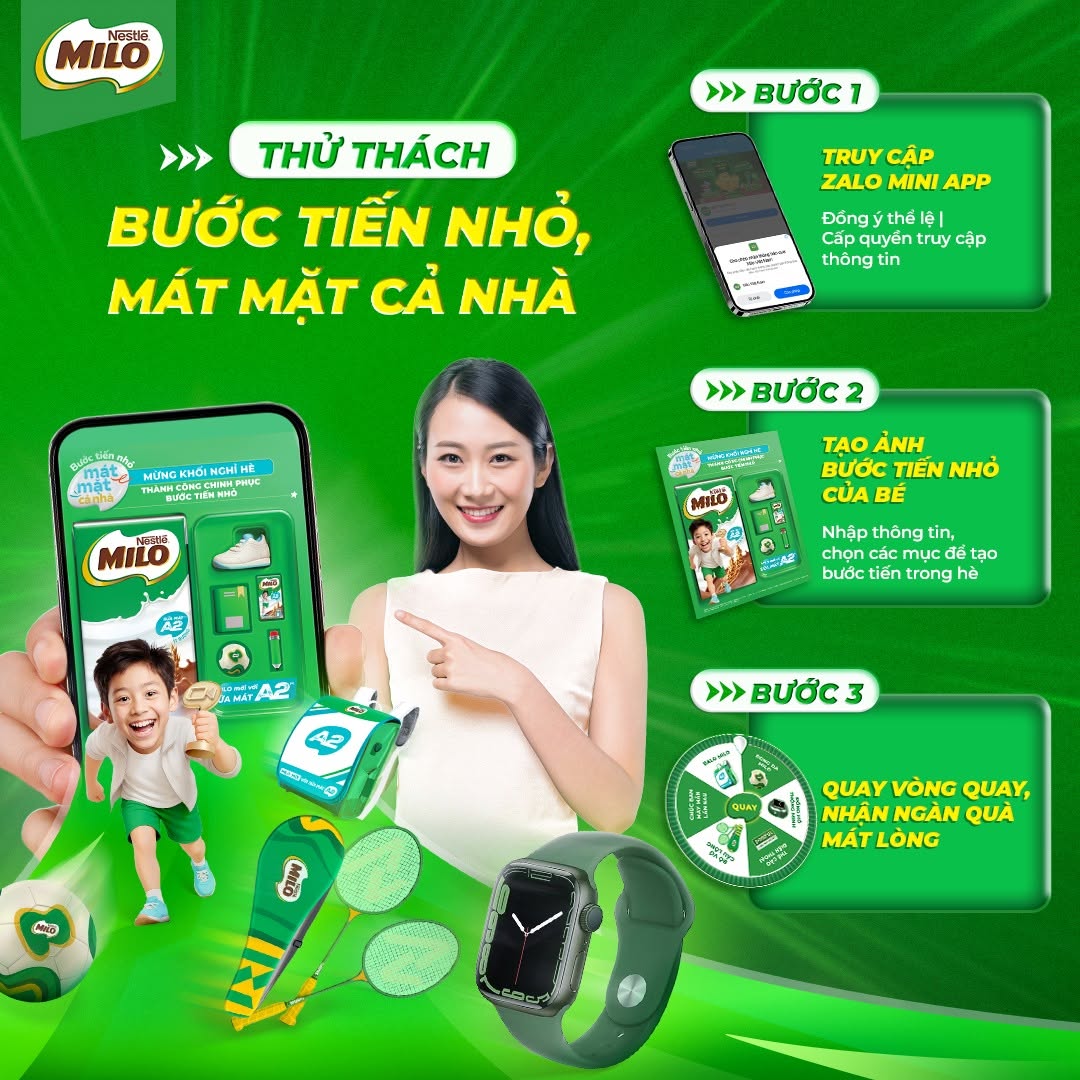
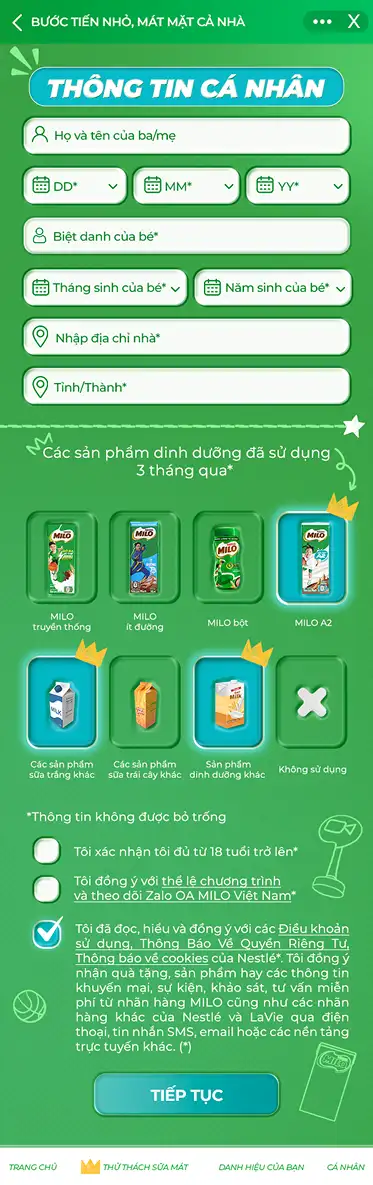
Gamification Mechanism: Marvy Co. developed a minigame on Zalo Mini App that offered a personalized AI experience. Parents uploaded photos of their children and selected keywords describing them (e.g., gender, interests, sports, academic activities, prominent skills).
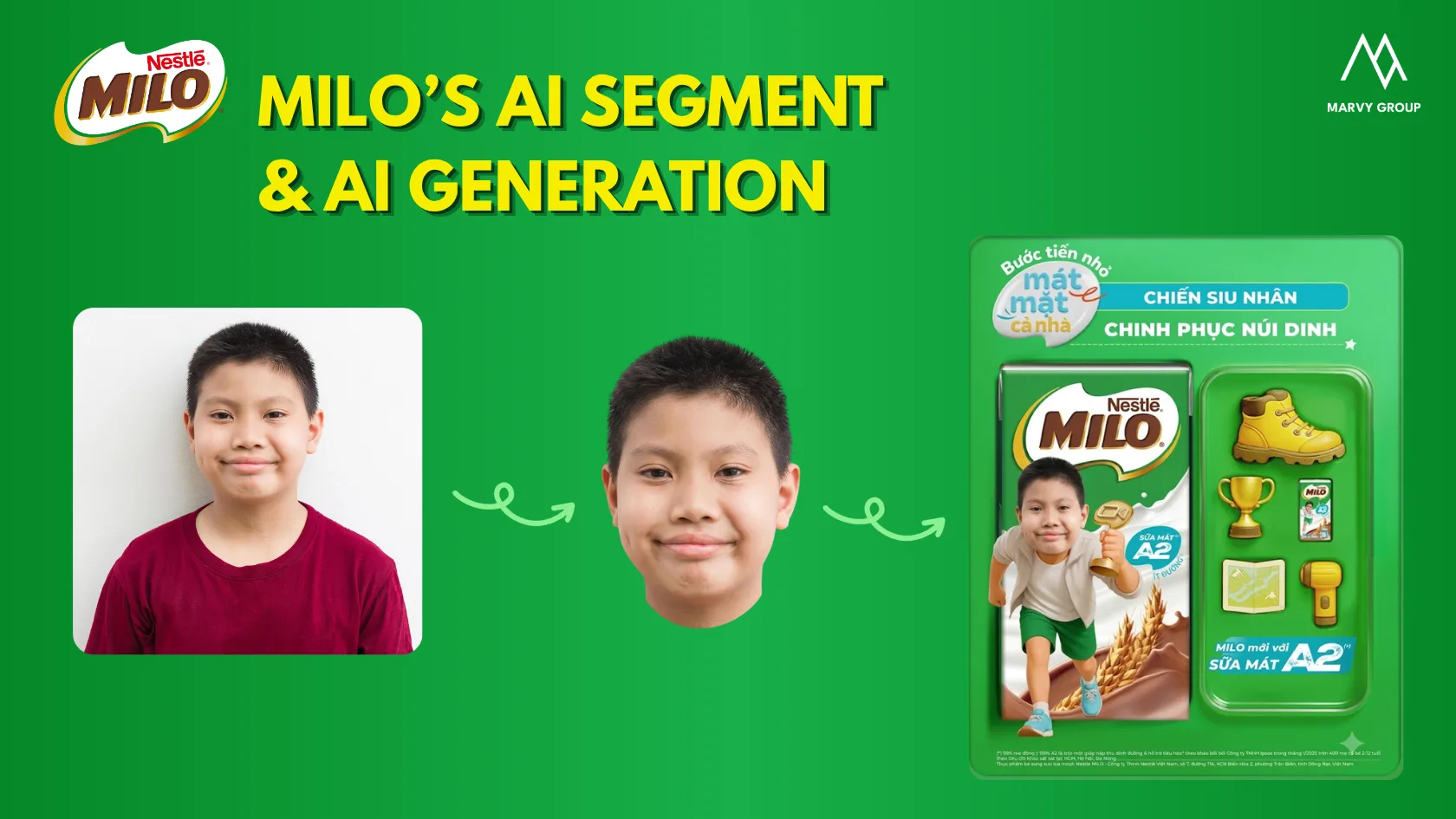
The system then used AI FaceSwap and AI Generation to create unique, brand-patterned images. Users shared these personalized images on Facebook to receive rewards, promoting user-generated content.
Data Collected:
Zero-Party Data: Explicit demographic and psychographic data was collected directly from parents through their keyword selections (e.g., "energetic," "creative," "studious"). This provided invaluable ZPD about what parents value and how they perceive their children.
First-Party Data: FPD included user engagement with the AI tool, the popularity of certain keyword combinations, social sharing behavior, and the reach generated by user-generated content.
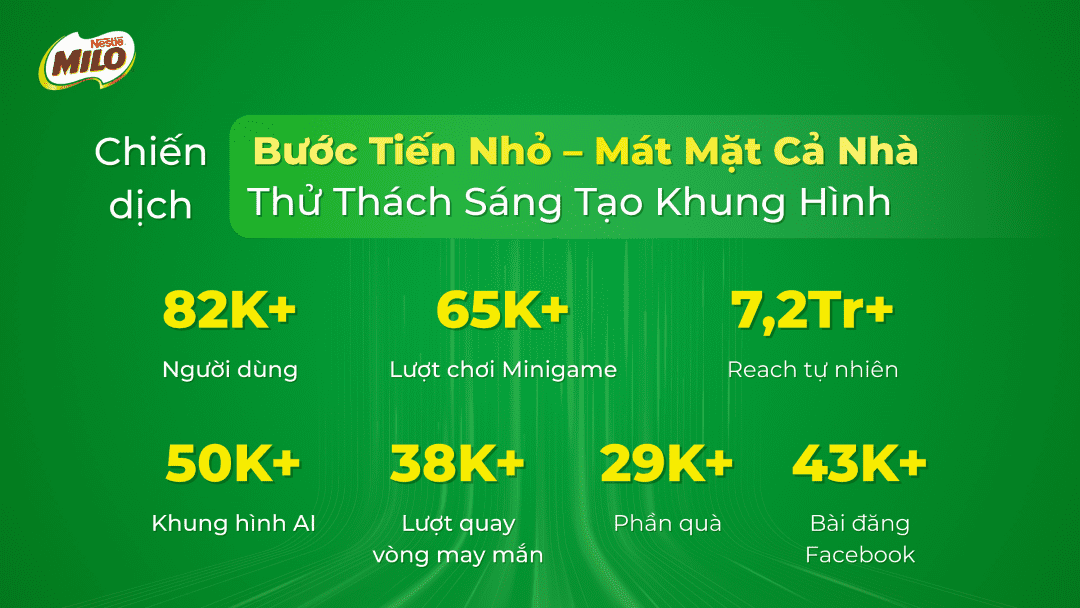
Impact: The campaign generated high engagement and organic social sharing, providing MILO with a substantial amount of zero-party data for hyper-personalized communication and robust first-party data for targeted CRM and remarketing strategies.
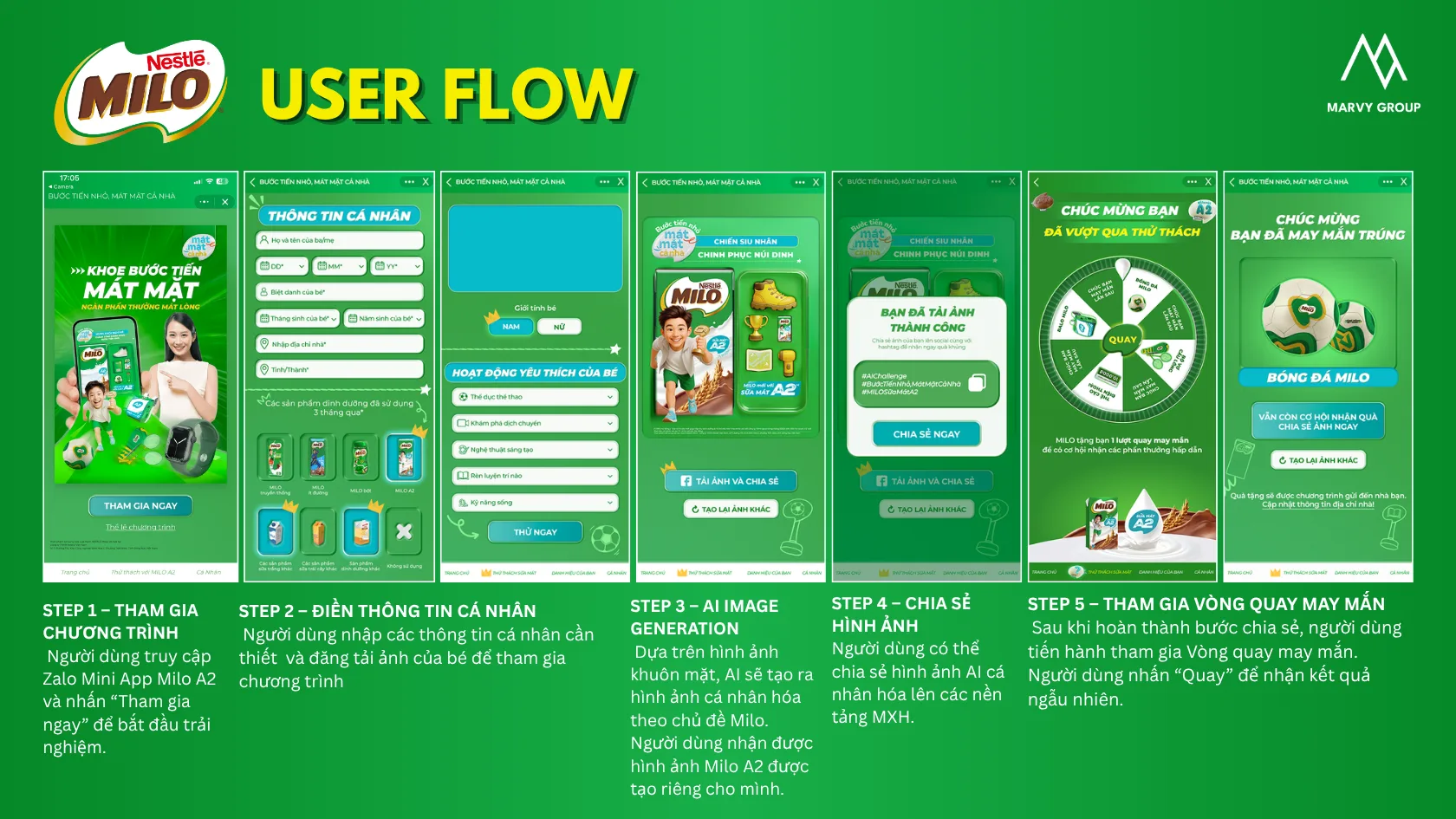
Explore the Milo Zalo Mini App AI Generation project with Marvy in more detail here.
Beyond Gamification: Maximizing Your Zalo Mini App Data Strategy
Collecting Zero-Party Data and First-Party Data through gamification on Zalo Mini App is just the beginning. The real power lies in how this data is utilized:
CRM Integration: Seamlessly integrate collected data into your Customer Relationship Management (CRM) system for a holistic view of each customer.
Hyper-Personalization: Use ZPD (preferences, interests) to tailor marketing messages, product recommendations, and future gamification experiences, leading to higher conversion rates.
Enhanced Engagement: Leverage FPD (behavioral patterns) to understand what drives interaction, optimize game mechanics, and create more compelling user journeys.
Privacy-First Approach: Always prioritize user consent and transparency. Gamification makes data sharing natural and beneficial for users, fostering trust.
Navigating the complexities of data collection and leveraging cutting-edge technology requires expertise. A trusted partner like Marvy Co. can help brands design and implement Zalo Mini App strategies that are both engaging and data-rich.
Conclusion
The privacy-centric marketing era demands a smarter approach to understanding your customers. Gamification on Zalo Mini App offers an unparalleled opportunity to collect high-value zero-party data and robust first-party data in an engaging, consent-driven manner. By transforming data collection into an interactive experience, brands can gain deeper insights, foster unwavering loyalty, and deliver truly personalized customer journeys. Ready to transform your Zalo Mini App strategy and unlock invaluable customer insights?
For more details on enhancing your digital presence, explore our other services: