








AR Geolocation in Restaurant and Coffee Chains – A New Trend in the F&B Industry
Introduction
In the digital era, the F&B (Food & Beverage) industry is no longer limited to offering delicious food and drinks; it must also provide customers with unique experiences. One of the most innovative technologies gaining momentum today is AR Geolocation (Augmented Reality with geolocation).
With AR Geolocation, restaurant and coffee chains can transform dining spaces into an “interactive digital playground,” creating a distinctive brand identity and a competitive edge. This article explores in detail what AR Geolocation is and how it can be applied in the F&B sector to boost revenue, strengthen branding, and improve customer retention.
1. What is AR Geolocation?
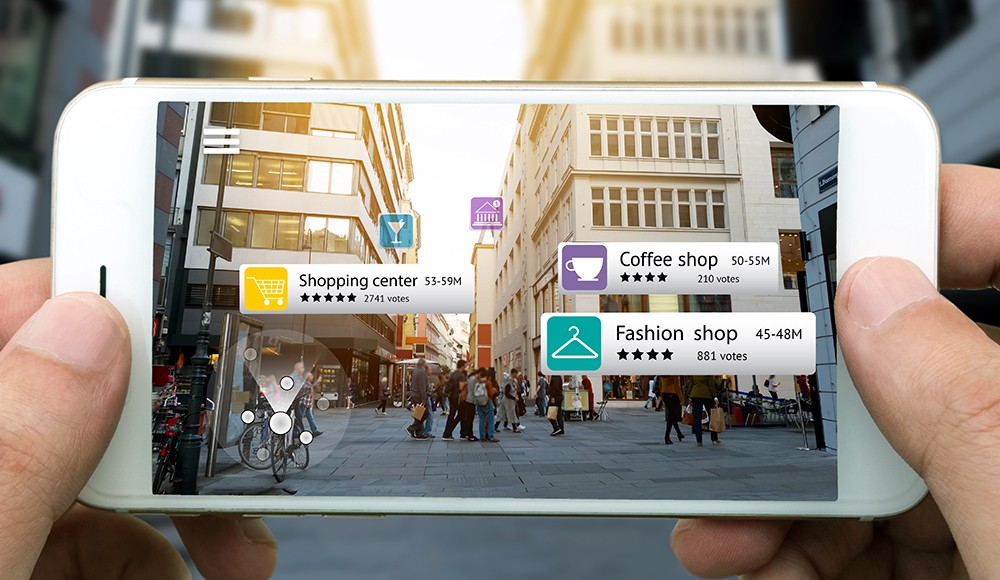
AR Geolocation combines augmented reality (AR) with GPS/map-based positioning. It allows digital objects, 3D models, or virtual effects to appear at real-world locations. When customers use their smartphone cameras or AR glasses at a specific location, they can see:
3D characters, icons, or digital objects overlaid on real-world surroundings.
Virtual information such as menus, promotions, or navigation guides.
Mini-games and interactive experiences within the restaurant or café environment.
In short, AR Geolocation allows customers to enjoy both F&B services and entertainment in one place.
2. Benefits of AR Geolocation for Restaurants and Coffee Chains
2.1. Attracting New Customers
Customers can discover a restaurant through AR-based treasure hunts on maps.
“Virtual reward hunts” (coupons, vouchers) encourage first-time visits.
Novelty creates viral effects on social media.
2.2. Enhancing In-store Experience
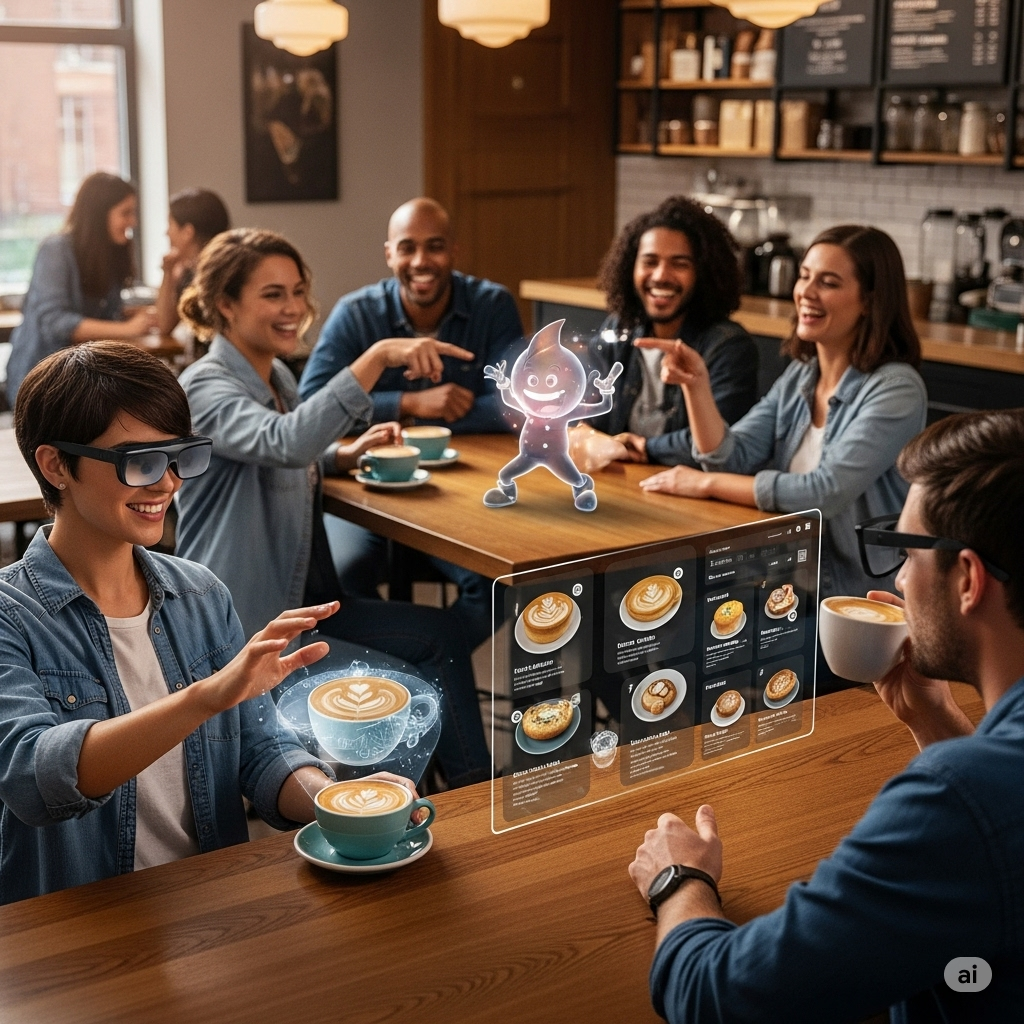
AR menus display 3D dishes directly on the table before ordering.
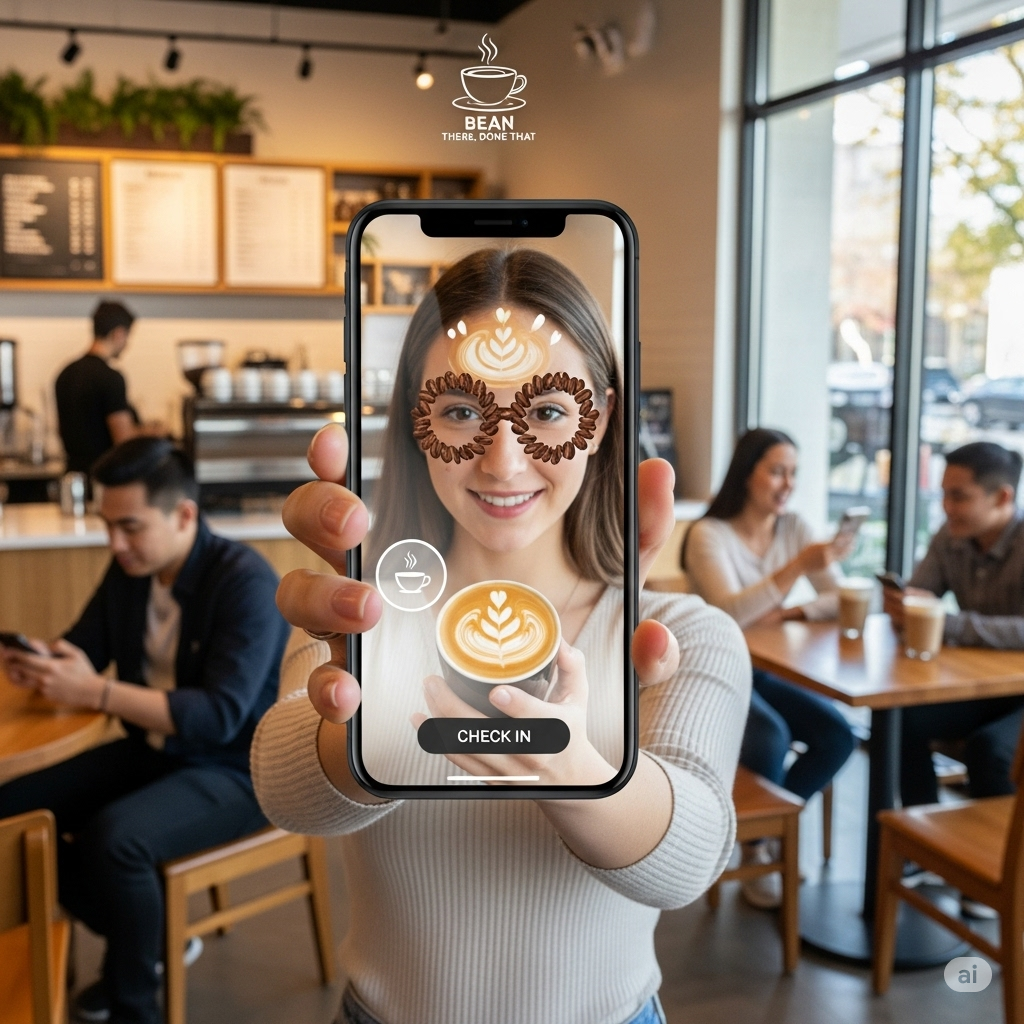
“AR check-ins” with branded mascots or themed characters.
Mini-games inside cafés (e.g., finding hidden AR objects to win discounts).
2.3. Building a Unique Brand Identity
Creative AR-driven marketing campaigns.
A modern, tech-savvy, youthful brand image.
Stronger emotional connection with customers through interactive content.
2.4. Boosting Revenue and Retention
AR loyalty programs encourage repeat visits to earn rewards.
Customers spend more time at the restaurant, increasing upsell potential.
A stronger sense of community and long-term customer loyalty.
3. Applications of AR Geolocation in Restaurant and Coffee Chains
3.1. AR Voucher Treasure Hunts
A coffee chain could launch a “Collect Virtual Coffee Beans” campaign across city hotspots. Customers use the app to capture beans and redeem them for vouchers at the café.
➡️ Result: Higher foot traffic and new customer acquisition.
3.2. Branded AR Check-ins and Filters
Coffee shops and restaurants can design AR filters or characters for social media check-ins. For example, Starbucks could create a dancing coffee cup mascot for Instagram/TikTok videos.
➡️ Result: Organic brand promotion through user-generated content.
3.3. AR-Powered Events
Restaurants can host events such as a “Coffee Festival in AR” or “Virtual Pizza Hunt” inside the café. Players interact with the AR space and redeem real rewards.
➡️ Result: Event-based revenue growth and stronger community engagement.
3.4. AR-based Location Markers
Standing out among hundreds of nearby cafés can be challenging. With AR Geolocation, a restaurant can place a 3D logo or mascot marker visible on AR maps. Customers see the brand icon appear over the actual restaurant location when browsing.
➡️ Result: Higher brand visibility and easier customer navigation.
4. Case Studies – AR in the F&B Industry
4.1. Starbucks AR Experience
Starbucks launched AR in Shanghai stores, allowing customers to scan items and view the entire coffee-making process, from bean to cup. This enhanced brand storytelling and customer engagement.
4.2. Boutique Cafés in Vietnam
Several small cafés in Ho Chi Minh City have begun experimenting with AR filters for check-ins and AR coupon hunts. Despite limited budgets, these campaigns gained strong traction on TikTok.
5. Challenges of Implementing AR Geolocation in F&B
High development costs if starting from scratch.
Customer accessibility: some users may avoid downloading apps, and older smartphones may struggle with AR.
Content updates: AR filters and games must be refreshed regularly to maintain engagement.
➡️ Solution: Partner with professional AR/VR studios or leverage existing AR platforms to cut costs and shorten deployment time.
6. Future Trends of AR Geolocation in Restaurants and Cafés
Gamified Loyalty Programs: Combining AR quests with rewards.
AI-powered AR Menus: Personalized dish recommendations based on customer history.
Metaverse Cafés: Hybrid virtual cafés connected to real-world outlets.
Cross-branch AR Loyalty Missions: Customers earn points by visiting multiple locations.
Conclusion
AR Geolocation is redefining the F&B industry by enhancing the customer journey beyond just food and drinks.
With its ability to attract new customers, enrich in-store experiences, strengthen brand identity, and increase revenue, AR Geolocation is becoming a powerful tool for restaurants and coffee chains in today’s highly competitive market.
Looking for an AR Geolocation solution to engage audiences at events, marketing campaigns, or commercial applications?
Marvy Co. — a pioneer in AR/VR/XR in Vietnam — offers end-to-end services:
Location-based AR games for festivals, malls, and public events.
Interactive AR marketing campaigns that boost engagement and social sharing.
AR tourism experiences with virtual content displayed right at real-world landmarks.
Let Marvy turn your virtual interaction ideas into real-life experiences — vivid, creative, and shareable.
📩 Contact us today for the right solution: Marvy Website