








Introduction
In today’s digital landscape, customers are constantly looking for novelty and interactive experiences. Leading brands in Vietnam have started to integrate AR Geolocation games into their existing mobile apps to boost engagement, attract users, and create unique customer journeys.
Notable campaigns such as Aeon Mall Hà Đông (executed by Marvy) and Nutifood’s AR Geolocation Bridge have demonstrated the power of this technology in connecting consumers with brands.
So, how can brands integrate AR Geolocation games into their apps? Let’s dive into the details.
1. What is an AR Geolocation Game?
An AR Geolocation game combines augmented reality (AR) with geolocation technology. Players can:
Use the brand’s mobile app.
Activate the camera & GPS to join missions.
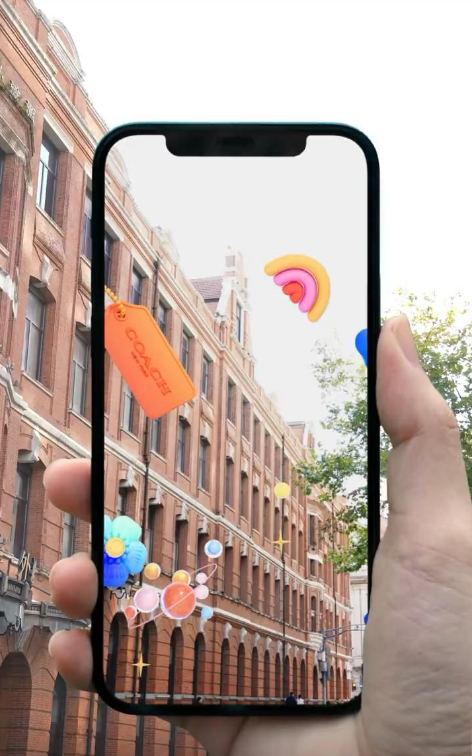
See virtual objects (coupons, mascots, bridges, or 3D assets) appear at real-world locations.
2. Why Integrate AR Geolocation into a Brand App?
Enhance customer experience: turn a brand app from a utility into an entertainment and engagement platform.
Increase app usage time: users return to the app multiple times to play AR missions.
Drive foot traffic to physical locations: encourage customers to visit stores or event booths.
Boost social virality: AR experiences are highly shareable on TikTok, Facebook, and Instagram.
Collect behavioral data: gather insights on user location, interaction time, and engagement levels.
3. How AR Geolocation Integration Works in an Existing App
3.1 Technical Architecture
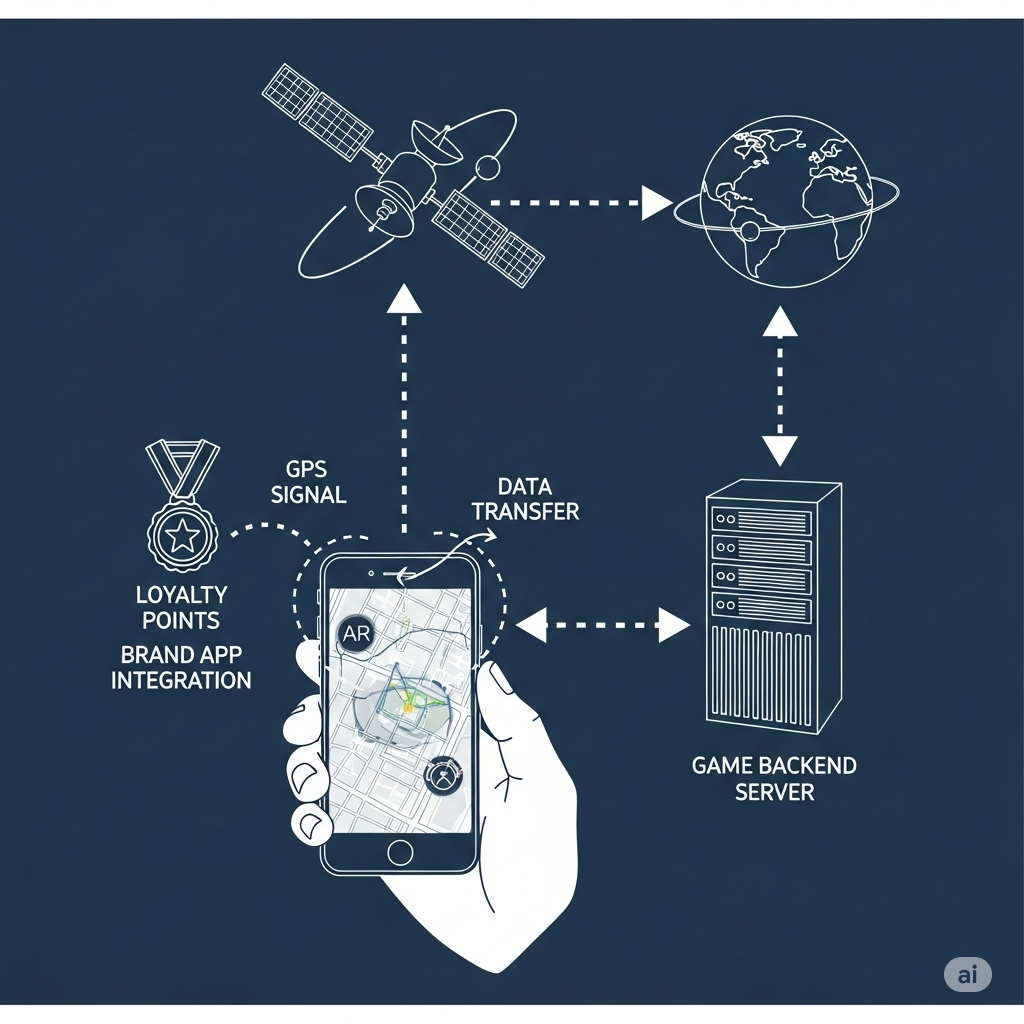
AR Module: integrate AR SDKs (ARCore, ARKit, 8thWall, or Niantic Lightship).
Geolocation system: use GPS or VPS (Visual Positioning System) for accuracy.
Game backend: manage virtual items, prizes, and user data.
App integration: sync with brand accounts, loyalty points, and e-vouchers.
3.2 Integration Process
Analyze the existing app → evaluate camera, GPS, and AR readiness.
Develop the AR mini-game → e.g., coupon hunt, challenges, collectible items.
Embed AR module → via SDK or custom-built module.
Connect rewards → coupons, vouchers, loyalty programs.
Real-world testing → ensure accuracy at actual physical locations.
Launch & promotion → QR codes, push notifications, and social media campaigns.
4. Case Study 1: Aeon Mall Hà Đông – AR Check-in Coupon Hunt (by Marvy)
Context
Aeon Mall Hà Đông wanted to create an innovative experience for mall visitors.
Solution
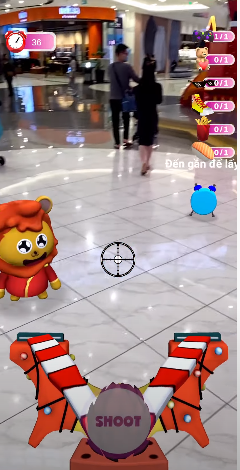
Marvy integrated an AR Geolocation game into Aeon’s app.
Users checked in at specific mall zones using AR camera mode.
When reaching the right coordinates, a 3D mascot appeared in AR.
Completing the mission rewarded users with digital coupons stored in the app.
Results
Boosted mall foot traffic during the event period.
Users opened the app more frequently.
Went viral on TikTok as visitors filmed themselves interacting with the AR mascot.

5. Case Study 2: Nutifood – The AR Geolocation Bridge
Context
Nutifood aimed to launch a creative branding campaign with an innovative AR feature.
Solution
Developed an AR Geolocation Bridge: at designated locations, users opened the Nutifood app and saw a virtual bridge appear through AR.
Players crossed the AR bridge to claim prizes or join brand challenges.
The AR bridge became a campaign symbol and a unique brand identifier.
Results
Strong user-generated content shared across social media.
Nutifood delivered a never-before-seen AR experience, strengthening its brand image.
Boosted user interaction within the app.

6. Key Success Factors
Accurate geolocation: GPS outdoors, VPS indoors.
High-quality AR visuals: engaging 3D characters and animations.
Seamless app integration: lightweight, smooth performance.
Attractive reward system: coupons, vouchers, loyalty points.
Parallel marketing strategy: event teasers, QR codes, social sharing.
7. Future Trends
Gamification + Loyalty Programs: AR gameplay linked to loyalty points and rewards.
AR Social Sharing: one-tap recording & sharing directly to TikTok or Instagram.
Metaverse mini-games: combining AR Geolocation with VR and 3D mapping.
AI + AR personalization: tailoring AR challenges to individual customer profiles.
Conclusion
Integrating AR Geolocation games into a brand’s existing app transforms the application into a powerful customer engagement tool, rather than just an information hub.
Campaigns like Aeon Mall Hà Đông (by Marvy) and Nutifood’s AR Geolocation Bridge prove that this technology not only enhances customer experience but also creates viral marketing impact.
Moving forward, AR Geolocation will become a key driver of Digital Experience Marketing, helping brands bridge the physical and digital worlds.
Looking for an AR Geolocation solution to engage audiences at events, marketing campaigns, or commercial applications?
Marvy Co. — a pioneer in AR/VR/XR in Vietnam — offers end-to-end services:
Location-based AR games for festivals, malls, and public events.
Interactive AR marketing campaigns that boost engagement and social sharing.
AR tourism experiences with virtual content displayed right at real-world landmarks.
Let Marvy turn your virtual interaction ideas into real-life experiences — vivid, creative, and shareable.
📩 Contact us today for the right solution: Marvy Website